
Eni Joule for Entrepreneurship: three startups receive awards from ...
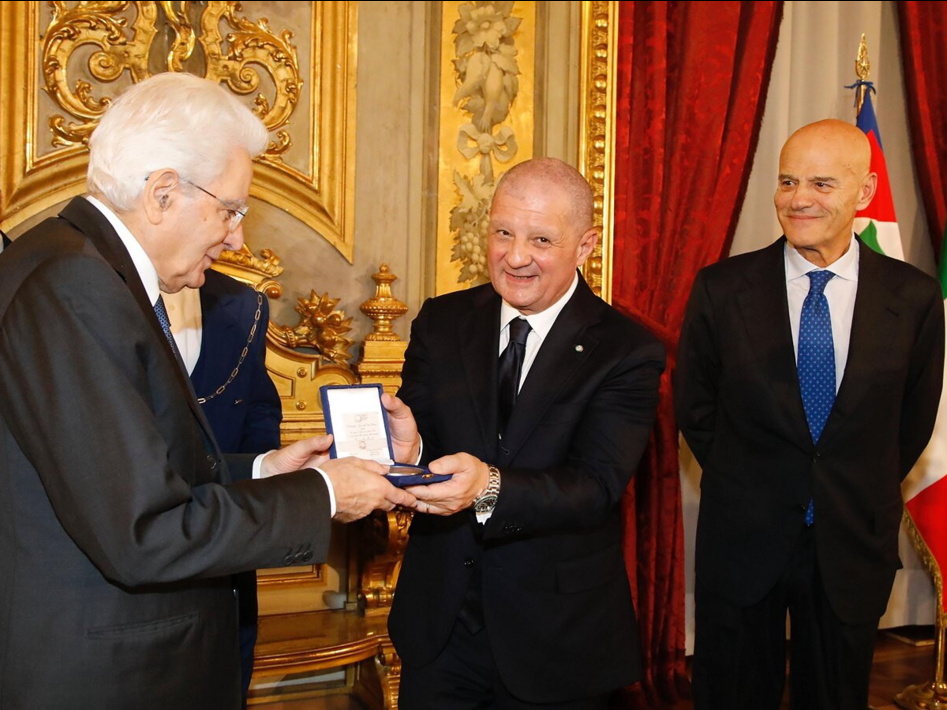
HBI, Sly, and RarEarth receive a “Special Mention”, as part of the 2024 edition of the Eni Award.
Last update:
15 ottobre 2024

The startups that received the “Eni Joule for Entrepreneurship” Special Mention were:
- HBI - Human Based Innovation, a Bolzano startup, has created and patented a technology for recycling sewage sludge;
- SLY, a startup based in Santa Caterina dello Ionio, Catanzaro, has created advanced AI technology to detect and categorise forest fires at the extremely early stage; and
- RarEarth, a Milan-based startup, has created a new chemical method to recycle rare earth elements from the electric motors of two-wheeled vehicles.
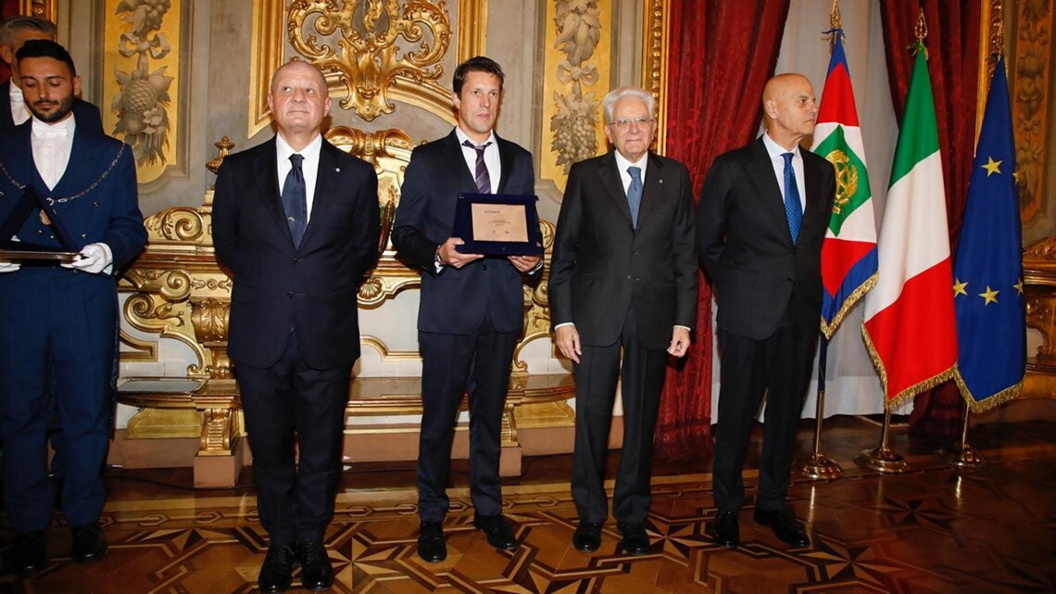
Eni Award 2024, the winners were:
- In the Energy Transition category, which focuses on research into energy efficiency and carbon dioxide capture, utilisation, and storage, Marc Fontecave from the Collège de France received the award. Marc Fontecave’s research focuses on creating technologies to use CO2 as a substitute carbon source for making compounds with significant industrial value. Inspired by biological systems, it has created innovative catalysts that are highly efficient and selective, used in electrocatalytic CO2 reduction processes driven by renewable energy.
- In the Energy Frontiers category, the prize for work on renewable sources and energy storage went to Nam-Gyu Park from Sungkyunkwan University, South Korea, for his research into solid-state perovskite solar cells. Prof. Park’s work has contributed to research and development of a class of new materials for PV devices which quickly outperformed all other solar technologies in efficiency and stability, even exceeding silicon, and are now emerging as key players in the energy market.
- In the Advanced Environmental Solutions section, which aims to boost science and technology for protecting and sustainably using natural resources, Holger Braunschweig from Julius-Maximilians-Universität Würzburg in Germany won the prize for his research on reducing waste and toxic elements by directly bonding nitrogen with light elements without using transition metals. Prof. Braunschweig has demonstrated that light elements like boron can enable reactions previously possible only with toxic heavy metals.His research has notably succeeded in turning molecular nitrogen into ammonia. This discovery makes it possible to avoid expensive purification phases that produce waste and save considerable amounts of energy, also preventing the environmental and health problems associated with many toxic metals.
In the Young Researcher of the Year category, which honours two researchers who have earned PhDs from Italian universities, Elvira Spatolisano and Stefano Toso received the awards.
- Elvira Spatolisano, who earned her PhD from Milan Politecnico, led a study to harness hydrogen sulphide, a compound often found in natural gas, which is the cleanest and most crucial fossil fuel in the shift to renewable energy. These processes enhance environmental sustainability by turning toxic waste into valuable products like fertilisers or hydrogen.
- Stefano Toso, who completed his PhD at the Università Cattolica del Sacro Cuore in partnership with the Italian Institute of Technology (IIT), researched metal halides, a new class of semiconductors that have outstanding photovoltaic properties and are helpful in creating effective opto-electronic devices.The nanomaterials he has developed could be used in photovoltaics, photocatalysis, optoelectronics, and emerging areas like quantum computing.
The “Young Talents from Africa” section was launched in 2017 to mark the Eni Award’s tenth anniversary. This year, a total of four awards were presented to Favour Agbajor from Durban University of Technology (South Africa), Petra Kienyiy Chui from Egerton University (Kenya), Lakhdar Hamidatou from Ecole Nationale Polytechnique de Constantine (Algeria), and Nomthandazo Precious Sibiya, also from Durban University of Technology (South Africa). The winners will receive a scholarship to pursue a doctorate at top Italian universities, where they can further refine the innovative ideas from their master’s thesis.
- Favour Agbajor has developed innovative models that blend building design and functioning with renewable energy systems with a view to achieving carbon neutrality.
- Petra Kienyiy Chui has assessed the amounts and identified the features of microplastics, as well as the water quality, in Kenya’s Njoro River and Lake Nakuru.
- Lakhdar Hamidatou has developed and tested a detachable cooling kit for commercial solar panels, using natural materials that change state to regulate temperature.
- Nomthandazo Precious Sibiya, lastly, has developed a technique for treating wastewater using magnetic coagulation separation.
In the Eni Innovation Recognition section, which honours the most innovative projects by Eni researchers and technical experts, the following received awards:
- Cristina Bonanomi, Rino Bonetti, Silvia Pavoni (Eni), Davide Moscatelli, Edoardo Terreni (PoliMI), for the invention of a process to produce bio-oil from lignin;
- Riccardo Borgomaneri, Luigi Colombo, Francesca Galimberti, Samuele Gori, Alberto Landoni, Nicoletta Panariti, Rita Ponzo (Eni) for their innovative “Bio-Slurry” technology, a single-step process that turns heavily contaminated bio-feedstock into valuable products.
- Mirko Barbavara, Gabriele Bianchi, Stefano Cardamone, Lino Carnelli, Davide Deriu, Carla Lazzari, Nicola Mancini, Tamara Passera, and Giuseppe Sabetta (Eni) for their work on the Eni TES, a thermal energy storage system.
